Bird Watching on the Orange River Near Orania: A Complete Wildlife Guide
Why the Orange River is a Premier Bird Watching Destination
The Orange River near Orania flows through a semi-arid landscape, and this contrast between the dry Karoo environment and the lush riparian vegetation along the riverbanks creates an exceptional habitat for birds. The river provides water, food, and shelter that attract hundreds of species throughout the year, making this one of the most rewarding bird watching destinations in the Northern Cape.
The African Fish Eagle
The African Fish Eagle is perhaps the most iconic bird on the Orange River. Its distinctive, haunting call is one of the most recognisable sounds in Africa and is often called the "voice of Africa." These powerful raptors are resident along the river year-round and can frequently be seen perched high in riverside trees or diving to catch fish with their powerful talons.
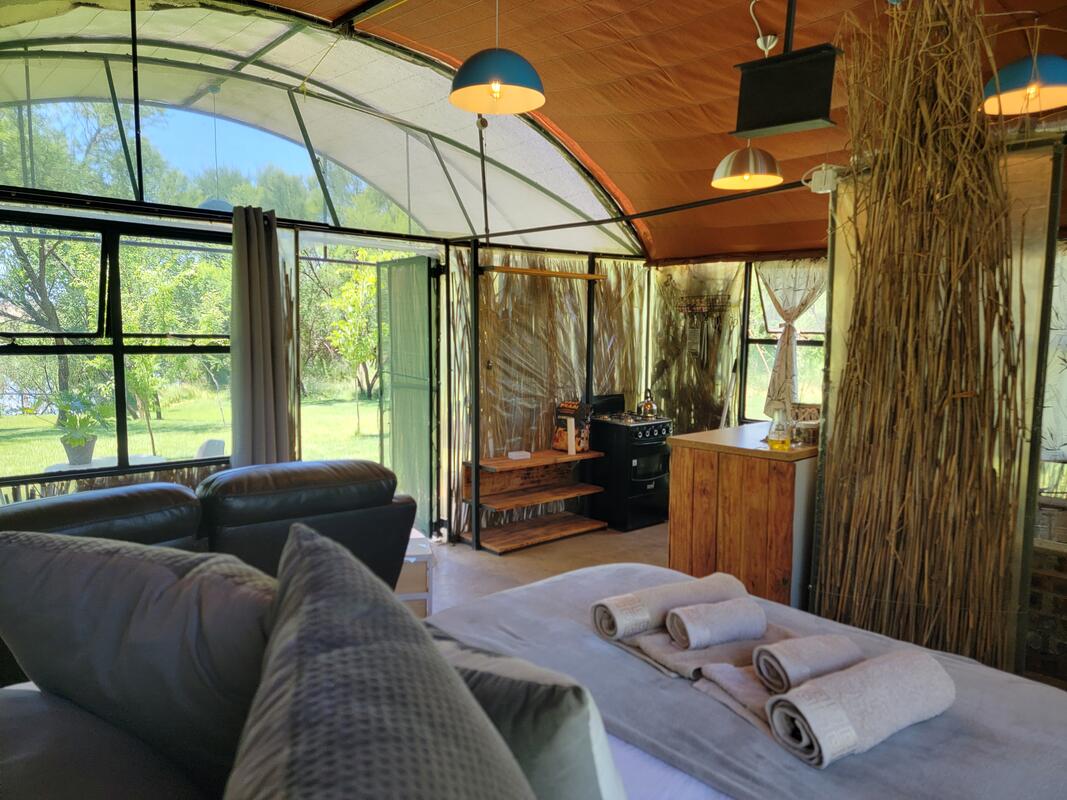
The Fisheagle Hut at Wilger Rus was named in honour of this magnificent bird, which guests regularly spot from their private deck overlooking the river.
The African Darter
The African Darter, also known as the snakebird because of its long, sinuous neck, is another resident species along this stretch of the Orange River. Unlike ducks that have waterproof feathers, the Darter's feathers absorb water, which allows it to dive more efficiently. After diving, you will often see Darters perched on branches with their wings spread wide to dry in the sun.
The African Darter Hut at Wilger Rus takes its name from this elegant bird, which is a regular visitor along the river bank.
Other Species Commonly Spotted Near Orania
- Giant Kingfisher: The largest kingfisher in Africa, often seen hunting along rocky sections of the river
- Pied Kingfisher: Distinctive black-and-white colouring, frequently hovers above the water before diving
- Goliath Heron: Africa's largest heron, standing over 1.5 metres tall
- Black-crowned Night Heron: Most active at dusk and dawn
- African Sacred Ibis: White body with black head, often seen in small groups along the water's edge
- Egyptian Goose: Common and noisy resident along the riverbanks
- Verreaux's Eagle: Found in the rocky koppies further from the river
- Sociable Weaver: Builds enormous communal nests on telephone poles and trees throughout the Northern Cape
- Southern Pale Chanting Goshawk: Commonly seen perched on fence posts along roadways
Best Times for Bird Watching
The best bird watching happens in the early morning and late afternoon when birds are most active. The breeding season from October to February brings an increase in activity as migratory species arrive and resident birds begin nesting. Winter months from June to August are excellent for spotting raptors and water birds in clear conditions with less vegetation obstructing views.
Bird Watching Tips for the Orange River
- Bring binoculars of at least 8x42 magnification for the best views
- A field guide to southern African birds is invaluable. Roberts Birds of Southern Africa is the standard reference
- Move slowly and quietly along the riverbank to avoid disturbing birds
- Early morning light is ideal for photography, with the sun behind you
- The river huts at Wilger Rus provide natural elevated viewing platforms directly on the water
Where to Stay for the Best Bird Watching Access
The Fisheagle Hut and African Darter Hut at Wilger Rus sit directly on the banks of the Orange River, offering unmatched bird watching access from your own private deck. Wake up to birdsong, have breakfast with Fish Eagles overhead, and spend your mornings exploring the riverbank on foot. Book a river hut at wilgerrusorania.co.za.